Low-Code/No-Code in 2026: Opportunity or Risk for Web Developers?
The web development landscape is evolving faster than ever.
Low-code and no-code platforms — once seen as tools for non-technical creators — are now powering complex enterprise-grade solutions.
By 2026, platforms like Bubble, Webflow, and OutSystems have become mainstream. Businesses love them for speed and cost savings. Developers, however, remain divided.
Is this the beginning of a developer-less future, or a new opportunity to innovate smarter?
This article explores both sides — opportunity and risk — behind the rise of low-code and no-code development in 2026.
What Is Low-Code and No-Code Development
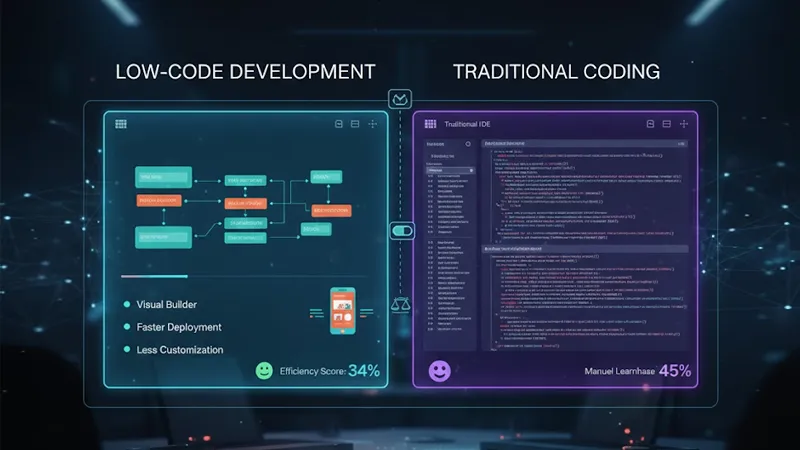
According to Wikipedia, low-code development involves using visual interfaces with minimal hand-coding, allowing developers to build software quickly.
No-code platforms go one step further — enabling users with zero programming background to create applications through drag-and-drop builders.
These platforms abstract away the complexity of syntax and backend configuration, letting users focus purely on functionality and experience.
Popular examples include:
- Low-code: OutSystems, Mendix, Appian
- No-code: Webflow, Bubble, Glide, Airtable
Their shared goal is clear — reduce technical dependency, accelerate delivery, and make development accessible to everyone.
How Low-Code and No-Code Work
Most low-code and no-code platforms are built on the same foundation:
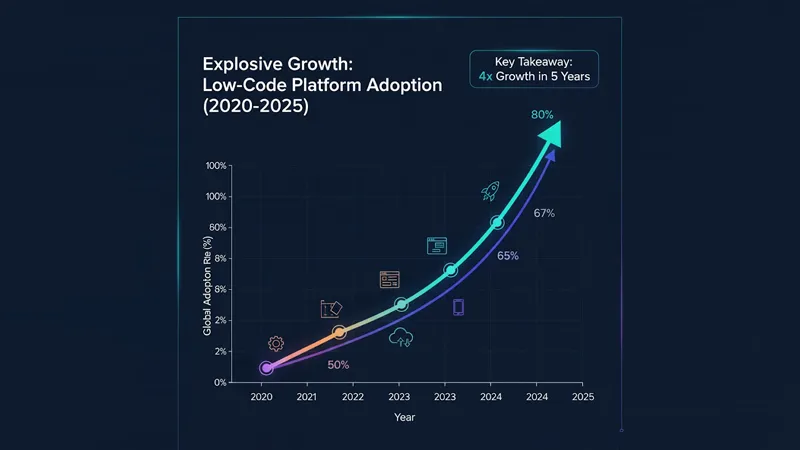
- Visual Logic Builders: Users create workflows using drag-and-drop logic blocks instead of writing raw JavaScript or Python.
- Pre-built Components: Ready UI elements like forms, buttons, and data tables eliminate repetitive coding.
- APIs and Integrations: Connect third-party services such as Stripe, Google Sheets, or Airtable seamlessly.
- Automated Deployment: Apps are deployed instantly on cloud-based infrastructure without manual setup.
Under the hood, these platforms still generate actual code, which runs on their managed servers — hidden from the user but crucial for performance and security.
For a deeper technical explanation, see MDN Web Docs: Web APIs.
Why Low-Code/No-Code Is Growing in 2026
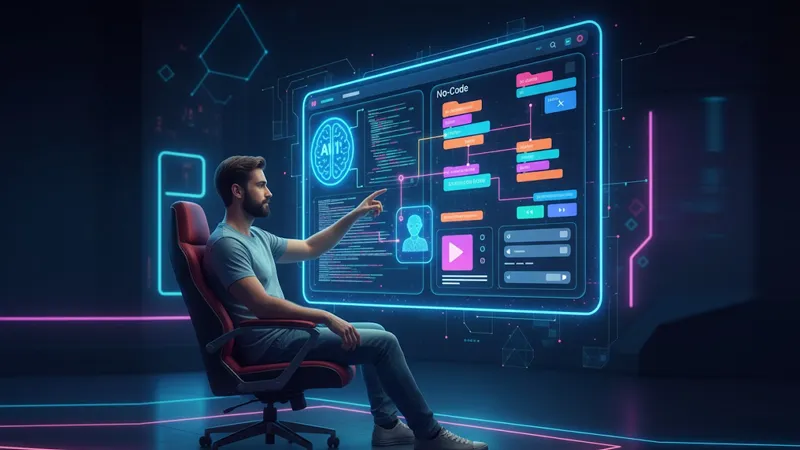
The global shortage of skilled developers and rising project costs have pushed organizations to adopt faster alternatives.
1. Faster Development
Apps that once took months can now be built in days using visual editors. This is especially valuable for startups and SMEs with limited budgets.
2. Cost Efficiency
Reduced development hours mean lower production costs. Teams can prototype, validate, and launch quickly without hiring large dev teams.
3. Democratization of Technology
Low-code and no-code allow business analysts, designers, and marketers to build functional tools independently.
This democratization brings agility — and sometimes, innovation from unexpected places.
4. Integration-Ready Ecosystem
Many modern platforms now support custom API calls, allowing hybrid setups where low-code solutions coexist with traditional systems.
Google Cloud’s AppSheet is a leading example — offering enterprise-grade scalability with no-code flexibility.
The Opportunities for Developers
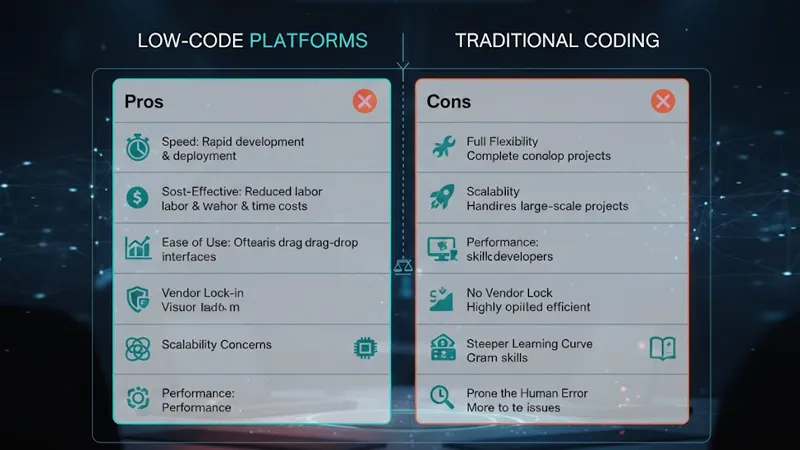
Despite fears, low-code does not eliminate developers — it changes their role.
1. Focus on Logic, Not Syntax
With repetitive UI tasks automated, developers can focus on designing better logic, database structures, and integrations.
2. New Consulting Roles
Businesses adopting low-code need experts who can guide architecture, scalability, and compliance — all areas where experienced developers excel.
3. Hybrid Solutions
Many agencies now combine traditional frameworks like React or Laravel with low-code backends to speed up delivery.
This hybrid model is reshaping how web projects are structured.
4. AI Collaboration
AI tools like ChatGPT and Cursor are increasingly integrated with no-code platforms, allowing developers to add custom intelligence without deep ML expertise.
You can read more about AI’s development role in our AI-Powered Development Guide.
The Risks and Limitations
While low-code tools are convenient, they come with trade-offs.
1. Limited Customization
When projects grow complex, platform restrictions often appear — limiting custom code access, performance tuning, or backend flexibility.
2. Vendor Lock-In
Most platforms host both code and infrastructure. Migrating to another platform or scaling independently becomes difficult.
3. Security Concerns
Developers have limited visibility into generated code, raising potential vulnerabilities in authentication or data storage.
See OWASP Security Guidelines for common low-code risks.
4. Skill Dilution
If teams rely too much on drag-and-drop systems, genuine coding expertise may erode over time.
This makes debugging, scalability, and innovation harder in the long run.
Real-World Adoption Examples
- Netflix Prototyping: Uses low-code tools internally for rapid UI testing before production rollout.
- Airbus: Builds internal logistics dashboards through Mendix for faster iteration.
- L’Oréal: Employs no-code workflows in Airtable for marketing automation across teams.
Each case reflects how low-code supports specific business outcomes — not as a total replacement for development, but as a productivity layer.
For more on this shift, explore Wikipedia: Digital Transformation.
The Future Outlook
By 2026 and beyond, low-code and no-code will coexist with traditional programming.
They will handle speed and accessibility, while developers focus on scalability, architecture, and innovation.
The real opportunity lies in fusion teams — developers, designers, and business users collaborating within shared low-code environments.
This approach is reshaping how digital products are built and maintained globally.
Final Thoughts
Low-code and no-code are not threats — they are evolution steps in web creation.
For developers, 2026 is not about competition with automation but collaboration with it.
The winners will be those who understand both worlds — the logic of code and the efficiency of visual development.
To see related innovations shaping modern web strategy, explore our Headless WordPress Guide and Core Web Vitals Guide.
Let’s Connect
Have a project in mind or need a stunning website?