AI-Powered Development: The Future of Web Agencies
Artificial Intelligence is transforming how web agencies operate.
From development workflows to project management, testing, and deployment — AI has become an integral part of modern web production.
In the past, web agencies relied solely on manual coding, human testing, and design iteration cycles. Today, tools like ChatGPT, Cursor, and GitHub Copilot have revolutionized these processes.
AI doesn’t replace developers — it empowers them.
When used strategically, it accelerates production, improves code quality, and gives agencies the flexibility to focus on creative problem-solving rather than repetitive technical tasks.
In this guide, we explore how AI-powered development is shaping the future of web agencies, its benefits, limitations, and where the human touch still matters most.
What Is AI-Powered Development
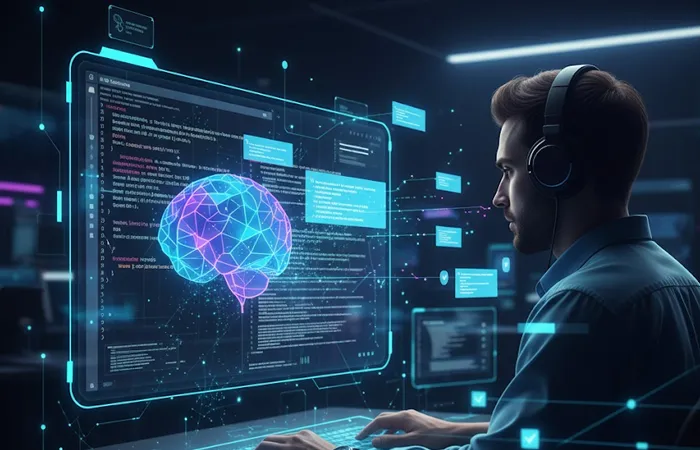
AI-powered development refers to using artificial intelligence tools to assist in coding, design, and deployment tasks.
These systems learn from vast datasets, understand context, and predict what a developer might write next.
Unlike traditional automation, AI development tools use machine learning and natural language processing to understand real intent and context — not just syntax.
Common AI-powered tools include:
- ChatGPT – for code explanation, content generation, and debugging support
- Cursor – an AI code editor that reads project context and generates real-time code suggestions
- GitHub Copilot – auto-completes lines and functions based on your codebase
- Codeium – an open-source AI assistant for multiple languages
- Replit Ghostwriter – for cloud-based collaborative AI coding
These tools act like digital co-developers — speeding up workflow without taking control away from the human.
Why Web Agencies Are Embracing AI
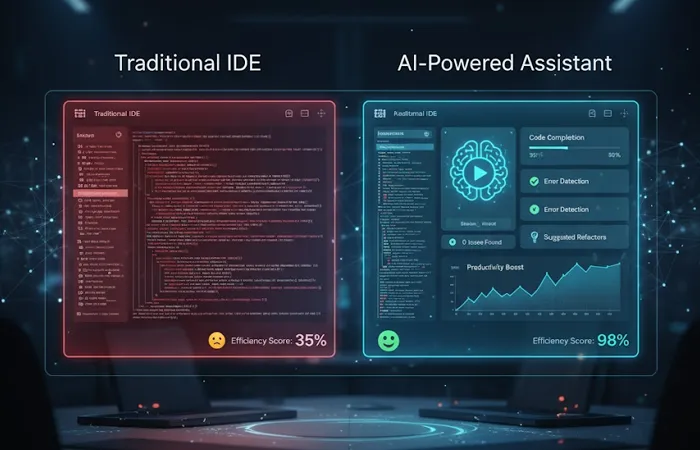
AI is no longer optional. It’s a competitive advantage.
Here’s how agencies benefit when integrating AI into their workflows:
1. Speed and Productivity
AI coding tools reduce the time spent on repetitive tasks like boilerplate setup, form validation, or API integration.
For example, Cursor can understand your project’s folder structure and auto-suggest functions that match your existing code.
This allows developers to focus on high-value logic instead of syntax or formatting.
2. Error Detection and Code Quality
AI tools help identify bugs faster than manual reviews.
Integrating models like Copilot or ChatGPT with testing frameworks such as Jest or PHPUnit can highlight logical inconsistencies and missing edge cases.
The result — cleaner, more reliable, and better-structured code in less time.
3. Smarter Collaboration
AI-powered editors enable real-time collaboration between front-end and back-end teams.
Instead of multiple meetings for small changes, developers can use AI to create unified documentation or quick prototypes on the go.
4. Cost Efficiency
Automating small, time-consuming tasks allows agencies to handle more clients without increasing headcount.
AI becomes the “scaling partner” that helps maintain quality while keeping delivery fast.
5. Consistency Across Projects
By training AI on internal code patterns or using custom prompts, agencies can maintain consistent standards across multiple projects — from naming conventions to responsive layout logic.
How AI Tools Fit into Modern Web Workflows
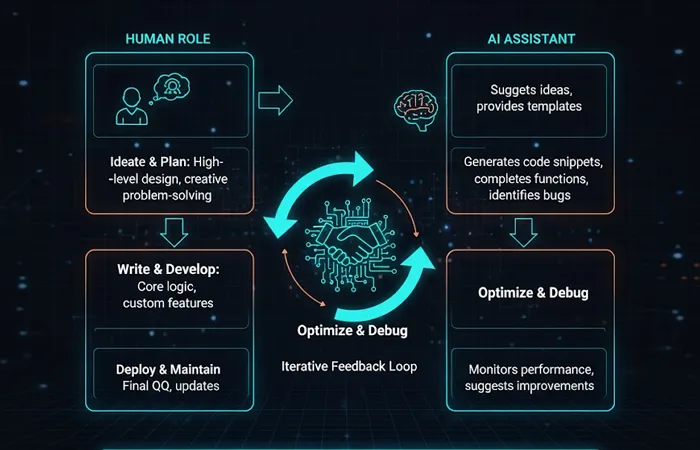
A typical AI-augmented development workflow at an agency like Masamind might look like this:
- Strategy & Planning
Use ChatGPT to generate initial content outlines, project scopes, and API documentation templates. - Design & Prototyping
Combine Figma with AI plugins to generate responsive layout variants and accessibility-checked color palettes. - Development
Tools like Cursor and Copilot assist in writing clean, consistent front-end and back-end code.
Developers review and refine all AI-generated code manually for quality assurance. - Testing & Debugging
Use AI to generate unit test cases, detect code anomalies, and optimize database queries. - Deployment & Monitoring
AI-powered CI/CD systems predict deployment risks and recommend fixes before push.
This integrated workflow not only improves efficiency but ensures every deliverable meets modern web standards — faster and more accurately.
The Role of Human Developers
AI is powerful, but it is not creative.
While AI can replicate patterns, it cannot truly innovate or understand business goals, brand voice, or emotional storytelling.
Human developers still lead in:
- System architecture and scalability decisions
- UI/UX design and empathy-driven layouts
- Security logic and data privacy compliance
- Problem-solving in unique, non-documented scenarios
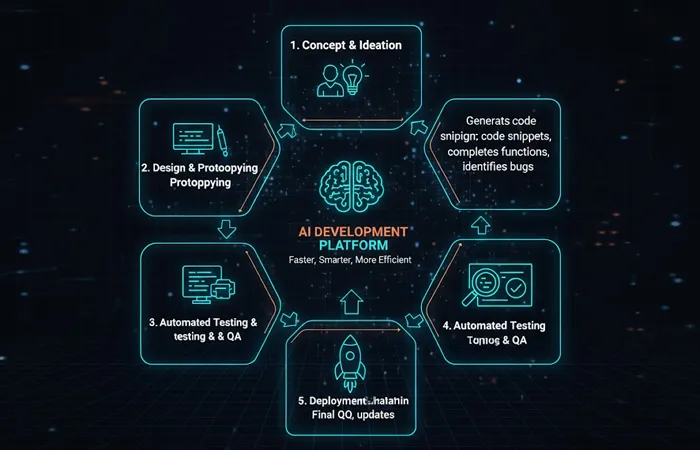
At Masamind, we believe that the best outcomes come from AI + Human Collaboration, not competition.
AI handles repetition. Humans handle imagination. Together, they build better experiences.
Real-World Examples of AI in Web Agencies
1. Smart Code Refactoring
Agencies now use AI to refactor legacy code automatically.
For instance, ChatGPT or Cursor can identify unused functions, duplicated logic, or outdated syntax — saving hours of manual cleanup.
2. Predictive UI Components
Design teams use AI to generate reusable React components based on Figma wireframes, speeding up prototyping and consistency across projects.
3. AI-Based SEO Content Development
Pairing AI writing tools with SEO insights allows agencies to produce optimized blog content faster — like our guide on Creating Blogs with ChatGPT.
4. Automated Testing Pipelines
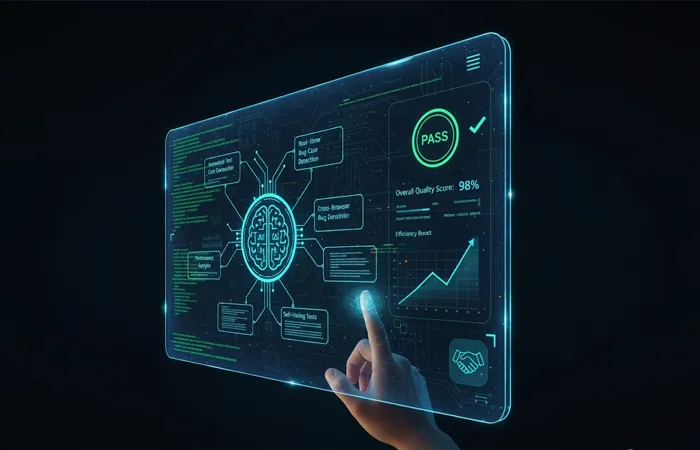
With AI-powered test generators, QA teams can now simulate real user behavior, automatically detect visual regressions, and fix accessibility issues before launch.
Challenges of AI-Powered Development
Even with all its benefits, AI has its limits.
1. Accuracy and Oversight
AI-generated code can sometimes include security flaws or inefficient patterns.
Human review is always essential.
2. Dependency Risk
Relying too heavily on AI can weaken developer learning. Agencies must treat AI as a partner, not a replacement.
3. Privacy and Data Protection
AI systems may temporarily process code or business logic on external servers. Agencies must ensure compliance with GDPR and data security protocols.
4. Client Education
Many clients still view AI-generated work with skepticism. Transparency and documentation help build trust in results.
The Future of AI-Powered Development
The coming years will see deeper integration between AI and the web ecosystem.
Expect more intelligent code editors, voice-assisted debugging, and real-time optimization tools embedded directly into platforms like Visual Studio Code.
Web agencies that adopt AI early — but wisely — will have a decisive edge in productivity and innovation.
At Masamind, we use AI to enhance development, not replace craftsmanship.
By balancing automation with human intelligence, we deliver faster, more consistent, and scalable digital experiences.
Final Thoughts
AI-powered development represents a new era in web creation.
For agencies, it is not just a productivity upgrade — it is a mindset shift toward smarter, data-driven creativity.
AI can handle the code, but humans make it meaningful.
That balance defines the future of digital craftsmanship.
If you are ready to bring AI-enhanced speed and precision to your next project,
Talk to Masamind — and let’s build something exceptional
Let’s Connect
Have a project in mind or need a stunning website?